
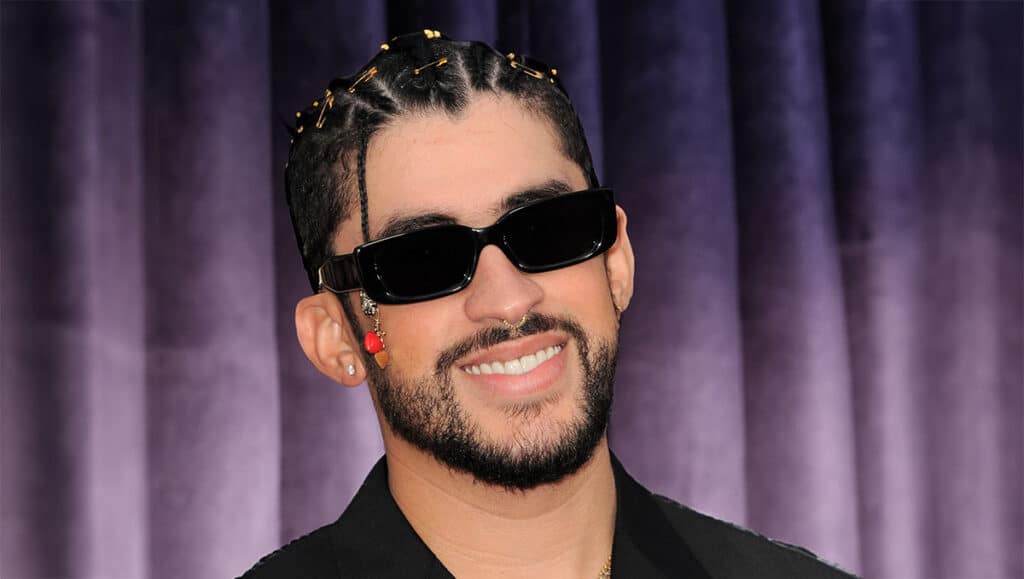
Bad Bunny is a Grammy-winning Puerto Rican reggaeton, Latin trap singer whose smooth raps, bright fashion sense, and combination of bad boy persona with social consciousness changed the landscape of global pop music ~ in Spanish.
Many people, including many Puerto Ricans, don’t like the misogyny, thug life, and gender fluidity in some of Bad Bunny’s early work. But every generation thinks young people are off track. What were you thinking about in your twenties? Back in the day, people said the same things about Frank Sinatra. I get it, but Conejo Malo keeps maturing as an artist. In just a few years, he went from bagging groceries in Arecibo, Puerto Rico to the world’s biggest pop star. That’s quite a rocket ride, and he’s held it together without losing his balance. He’s not doing the same thing over and over again. His artistry keeps evolving.
In the 1960s and 70s, Celia Cruz popularized Latin music around the world. Bad Bunny did it again in the last decade. Many artists made reggaeton the sound of global youth, but Bad Bunny climbed to the top of the heap with his artistry. Today he is the Big Bunny, and I really respect him.
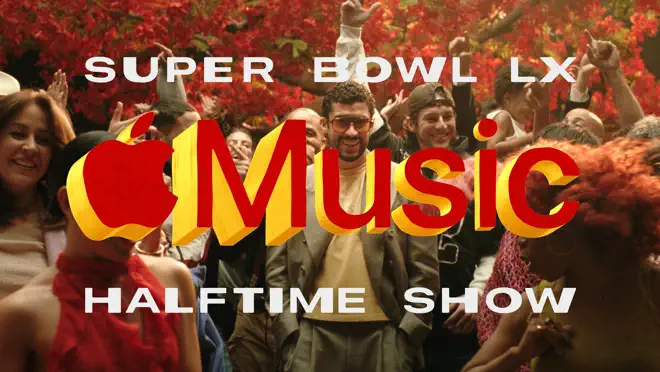
What I hope we can learn from Bad Bunny’s Super Bowl halftime show is that Puerto Ricans are just as red, white, and blue as all other Americans, and speaking Spanish or some other language doesn’t change that.
Super Bowl LX Halftime Show in 2026
Since the NFL announced that Bad Bunny would be performing the Super Bowl LX Halftime Show on February 8, 2026; it has become a lightning rod for both lovers and haters, but it was a wise choice. The NFL always turns to Latinos in times of trouble.
Many Americans don’t understand that Puerto Ricans have been Americans for over a century, fought valiantly and gave their lives in all the wars since World War I, and contributed a lot more than many Americans know to what makes America great.
The only worthwhile response to the haters is to smile and say see how much fun we’re having? Instead of being all grumpy and lonely, why don’t you come dance with us?
Bad Bunny’s Super Bowl trailer made me look up his song “Baile Inolvidable.” As I watched the video, I thought I know this place. It was filmed at the Arthur Murray Studio in Miramar, Santurce, San Juan where I first started learning to dance salsa during the pandemic.
Then it was run by “Tato” Ted Conrad. He was a real character, but also an expert in African Diasporic music and dance traditions. He used to wear wide dance pants and sunglasses all day and night and tell jokes to everyone. He if he liked you, he might show you his collections of African and Indigenous instruments, classic vinyl, and books about traditional culture. He had a big collection of marimbulas and some instruments whose names I don’t even know. He had a bowl that acted like an amplified speaker.
Tato really was a cultural expert. His name shows up in searches of Afro-Caribbean traditions. When a Puerto Rican wanted to resurrect the old Afro-Puerto Rican bomba martial art disguised as a dance tradition Kokobalé (like Cuban juego de maní or Brazilian capoeira), Tato knew the one guy who was a living connection to the tradition. Today Proyecto Kokobalé teaches kids at La Perla in the Community Batey of La Plaza del Negro on Fridays, before the evening’s bomba.
I just called my first salsa teacher at Arthur Murray, Yara, to say hello. Her husband Carlos runs the studio. She said it’s doing great.
If you go to Puerto Rico, don’t just be a tourist. Do what the Puerto Ricans do and dance. Arthur Murray is a great place to start. You can study salsa and all the Latin dances there and tell your friends, “I studied salsa at the same dance studio as Bad Bunny.” Go study bomba drumming and dancing with the Cepeda Family in Villa Palmeras. Study bomba, plena, or theatre at Taller Comunidad La Goyco in Santurce. It was organized by Tito Matos, one of Puerto Rico’s most respected plena teachers. Major Puerto Rican artists teach there.
And then you may understand el baile inolvidable, one dance, a special night, or a lost love that was so magical you’ll never forget it. And if that memory turns up with your last breath, you will die happy knowing that you really lived.
Since seeing Bad Bunny’s video, I just want to go home. They say home is where the heart is, and if you spend quality time with Puerto Ricans in Puerto Rico, you will surely become Boricua de corazon (of Puerto Rican heart.)
Debí Tirar Más Fotos
His 2025 album “Debí Tirar Más Fotos” (I should have taken more pictures) brought Bad Bunny into salsa.
In a way, salsa is a new sound for him, but in a way, he’s always been a salsero. His signature “Eh, Eh” is a minimalist form of the Diana, the call to prayer that starts many salsa songs. It’s a call to Elegua, God’s messenger in Yoruba traditions, to open a line to the divine. It’s because Latin music is mostly dance music and in both Indigenous Taíno and many African traditions, dance is how we pray. “Eh, Eh.”
Bad Bunny in Puerto Rico
No Me Quiero Ir de Aqui Puerto Rico Residency
Artists are always promoting themselvs, but Bad Bunny has done more for Puerto Rico than most. After the George Floyd murder, his Fundación Good Bunny painted “BLACK LIVES MATTER” on Ashford Avenue, the main street in Condado, in front of all the fancy stores.
During the pandemic he did a series of concerts in Puerto Rico which brought much need tourism dollars to the island. Everything had frozen up, but Bad Bunny got the island moving again.
His record-breaking “I Don’t Want to Go Away from Here,” 31-date Puerto Rico Residency, at “El Choli”, el Coliseo de Puerto Rico, from July 11 to September 20, 2025 got a lot of new people to discover the island’s riches for the first time.
Bad Bunny said that given the way the U.S. Federal Government had started harassing the American people in its anti-immigration push, he didn’t want to perform on the mainland because his concerts would become a target. Even though Puerto Ricans have been Americans for over a hundred years, he was right.
Bad Bunny in New York City
Most Wanted Tour
Bad Bunny “Most Wanted Tour” brings Puerto Rican reggaeton pop to Barclays Center in Prospect Heights, Brooklyn; on Thursday-Sunday, April 11-13, 2024 at 8pm. From $357. 🇵🇷
This may be a historical reference to Willie Colón’s 1967 album “El Malo” which began his partnership with “El Cantante” Héctor Lavoe. The album cover played up a gangster image. They look so young now.
Bad Bunny’s album title is a great double-entendre meaning the most popular artist, and a tough guy. Island Puerto Ricans like to put on that tough guy image, even though they are some of the nicest people on earth. It’s a defense mechanism that says I’m tough, so don’t mess with me.
In all the years I lived in Puerto Rico, I never had a problem, and I went to many places where even native Puerto Ricans are afraid to go. If you go looking for trouble, it will definitely find you, but that’s your own fault. If you always enter the neighborhoods with care, respect, and a smile in your heart, you never have a problem.
One of my best friends in Santurce, San Juan was a retired tough guy. His body was full of bullets and his skin was covered with knife slashes. He was crippled, but I knew him as a true humanitarian, and just the sweetest guy. As an old timer, he was a counselor to a couple of tough neighborhoods, Lloréns Torres, and La Perla. He was for real.
My friend taught me many things. He used to say, “Get the Fuck outta here” like the TV gangster in the movie “Home Alone,” but with a New York Puerto Rican accent that cracked me up. He criticized me for categorizing people by their national heritage. He said, “I don’t know about all these other people, but I’m just a human being.” He was right. The labels are nonsense. We are all just human beings. On my last day living in Puerto Rico, he took me to meet his family in Cataño. I’ll never forget that day. I can see it now.
I once asked my friend if I could enter Lloréns Torres because I lived across the street, and used to pass through on my way to Villa Palmeras to study bomba. I also studied salsa at the edge of Lloréns. He said of course because you bring the good or bad vibes with you. I knew that from dancing Argentine tango. When you enter a place to dance, you leave your troubles at the door, or you better just go home. Respect the dance circle, which in the Puerto Rican context is still the traditional Taíno batey, a sacred place where the community gathers to pray, dance, and socialize. Taíno traditions still live in the Puerto Rican people. The call of the drum means we are gathering in peace.
Something most visitors don’t understand is that the definition of home is different in the U.S. mainland and the Caribbean. On the mainland, home begins at your front door or maybe the entrance to your yard. In the Caribbean, home begins at the neighborhood boundary. As soon as you enter the neighborhood, you are being watched. So you must enter with the same respect and courtesy that you would bring when you enter the front door of someone’s home. Then you never have a problem, because you didn’t bring it.
Last time I was in Santurce, I looked for my old friend at his parking spot at Playa El Último Trolley because his phone number had gone dead. I couldn’t find him. I think he’s resting in peace now. So my old friend, Julio Antonio, I told your story with Bad Bunny’s because to me, you are two of Puerto Rico’s most wanted. Te amo. Te extraño. Gracias por tu amistad y bueno consejo. Dios te bendiga. ¡Ashé!
New York Venues
Bad Bunny is Puerto Rican, Puerto Rican
Benito Antonio Martínez Ocasio was born on March 10, 1994 in barrio Almirante Sur in Vega Baja, a small town right in the middle of Puerto Rico’s north coast.
Benito has said that his music comes from his family and his Puerto Rican culture. He got salsa and merengue from his dad, pop music from his mom, and tied it all together with hip hop.
He got a Vico C album one Christmas and inspired by that, he just started making music. Vico C is they artist who brought reggaeton from Brooklyn to San Juan, before it was even called reggaeton.
Benito studied some audiovisual arts at the University of Puerto Rico. While working as a supermarket bagger, his Soundcloud was blessed with over 1 million plays of “Diles.” That got Benito signed to Dj Luían’s strong Puerto Rican label Hear This Music.
The model for artist development in the reggaeton and Latin trap world’s is singing on each other’s recordings. In this way, established stars nurture and build audience for younger stars. It’s a clever adaptation. If the traditional paths are not open to you, you find another way. This way of singing together mirrors the sacred family which is the essence of Latin culture.
Bunny’s fashion sense is funky, sporty, glam, young Puerto Rican. It’s the nature of youth to turn something terribly bad into something terribly good. If he can hold onto it, that ability turns Bad Bunny into a good man.
Bad Bunny or Good Bunny?
Okay since when was youth music not about bad boy or bad girl personas? If you don’t speak Spanish, you have no idea how nasty some of these songs are. Watching his videos, one can’t help but wonder if he doesn’t ever get tired of all those sexy, sexy bodies. In his twenties, maybe not, but then the image might just be a show by a good Puerto Rican boy. Made you look. Gotcha. Ka-ching!!!
Bad Bunny has a lot of smarts in him. His point of view is that he’s got nothing to lose by just being himself.
He is against the blanket incarceration that so destroys Latin and Black communities across our country. Instead of putting young people of color in crime school and closing all paths to a normal life, we could surely find something better for them to do.
He is also speaking out about violence against women and homophobia. Sometimes his videos completely flip the meaning of what you heard in the song. He keeps you guessing and makes you think. That’s smart and the mark of an artist.
It will be interesting to watch Bad Bunny develop. He has that Puerto Rican sense of humor that can make you wish you could just stop laughing, or can make you cry about how stupid you’ve been without seeing it.
Never met him, but Benito sounds really grounded. He might be the one who softens the drug-fueled, oversexed, 20-year old fantasies of Latin trap into something the whole world rocks to, and is better off for it.
If you want to know what his songs are saying, you’ll just have to learn to speak Spanish. It’s not so difficult and Spanish has an inherent natural poetry that will enrich your life.
As I get older, I notice more and more that I have a different point of view from today’s youth. But I am also beginning to realize that young people’s point of view is equally valid and probably more important than mine.
Albums and Important Songs
“Nadie Sabe Lo Que Va a Pasar Mañana” (2023)
“Un Verano Sin Ti” (2022) has Benito missing someone. It was nominated for the “Album of the Year” Grammy. The song “Moscow Mule” was nominated for the “Best Pop Solo Performance” Grammy. Moscow Mule is a popular vodka drink in San Juan, Puerto Rico.
“El Último Tour Del Mundo” (2020) won the Grammy for “Best Música Urbana Album.”
“YHLQMDLG” (2020) won the Grammy for “Best Latin Pop or Urban Album.” The song “Un Dia (One Day)” was nominated for the “Best Pop Duo/Group Performance” Grammy.
“Oasis” with J Balvin (2019) was nominated for the “Best Latin Rock Rock, Urban or Alternative Album” Grammy.
“I Like It” by Cardi B, featuring Bad Bunny and J Balvin, was nominated for the 2019 “Record of the Year” Grammy. Cardi B’s hit based on the Pete “Conde” Rodriguez song “I Like it Like That” (1967), with Bad Bunny and J Balvin was Bad Bunny’s first No. 1 song. It blends Latin trap and salsa beats. It’s notable that the first Hot 100 No. 1 Latin trap song was based on Latin Soul, a late 1960s blend of African-American R&B and Latin sounds that was sung in English or in Spanish. The great Colombian writer Gabriel García Márquez was right in his central theme that history repeats itself.
“X 100pre” (2018) was nominated for the “Best Latin Rock, Urban or Alternative Album.” Right after changing labels to Rimas Entertainment, Bad Bunny released his debut album out of the blue with no fanfare. All I want for Christmas mom is a Bad Bunny record. The album’s title is pronounced Por Siempre (“por cien pre” Forever), get it? He’s probably hoping that his hot run will last forever. We hope it does too. Just two years out of a supermarket job, he has already dropped 34 tracks onto Billboard’s Hot Latin Songs chart. The singer developed the record back home in Vega Baja with his old friend La Paciencia and Tainy who also produced “I Like It.” We will probably be hearing a lot of the Dominican dembow “La Romana” featuring El Alfa this summer.
“Diles” (2016) put Ozuna, Farruko, Arcangel and Ñengo Flow on the record and made a video that pushed over 485 million views by April 2019. The song is about doing whatever you want sexually. That’s fun, but then what? Once you’ve done everything you can imagine, how do you top that? Pursued endlessly, sexual passion becomes a trap. There is a cultural basis for this. Latin culture, including Puerto Rican culture, tends to be very machista (male chauvinist). In machista culture, a woman is property and you can do whatever you want to her. That is what this song is about.
Estamos bien.