
World-Class Latin Culture and Global Roots
E-le-le, le-le-le… “Día de Muertos” ballet folklórico | Indigenous Parade | Dog Parade

Día de los Muertos (Day of the Dead) is a Celebration of Family
It is a Pan-Latin celebration whose Mexican tradition has gone global with its striking skull and skeleton folk imagery. But there’s nothing bad or scary about it.
Día de Muertos is a time to remember lost family members and be together one more time in spirit. You live as long as someone remembers you, and we never forget family. May you always be remembered.
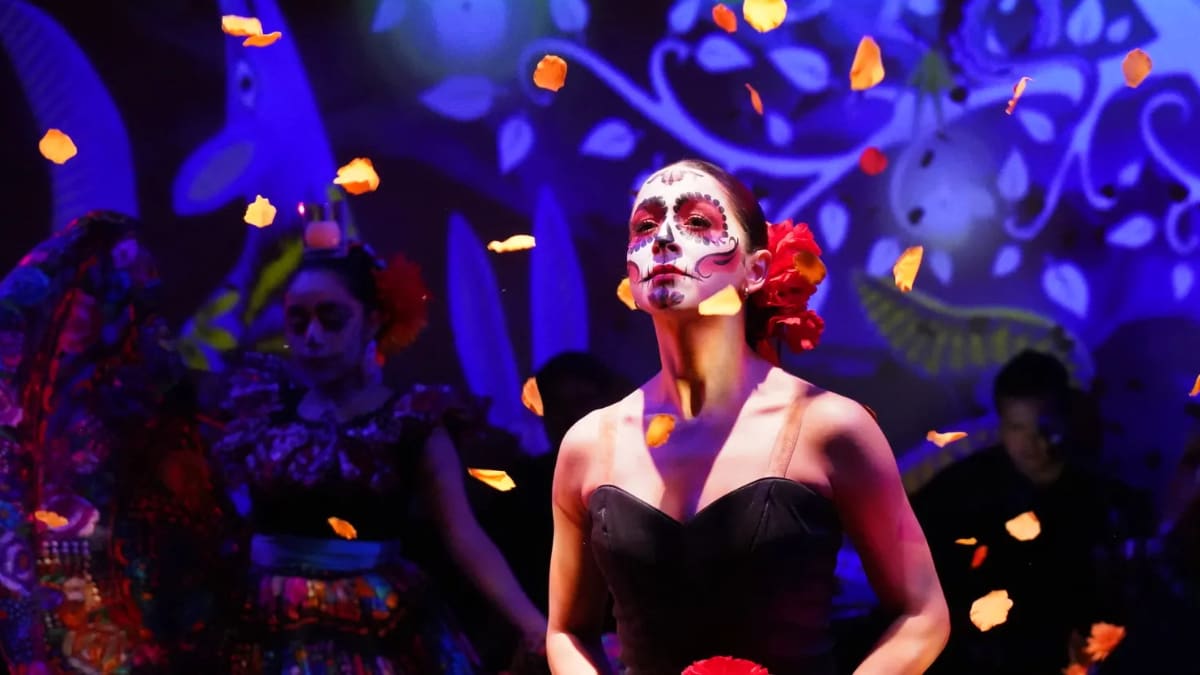
Calpulli Mexican Dance Company: Día de Muertos (Day of the Dead)
Learn the Mexican Day of the Dead tradition through the beautiful story of a young couple’s journey
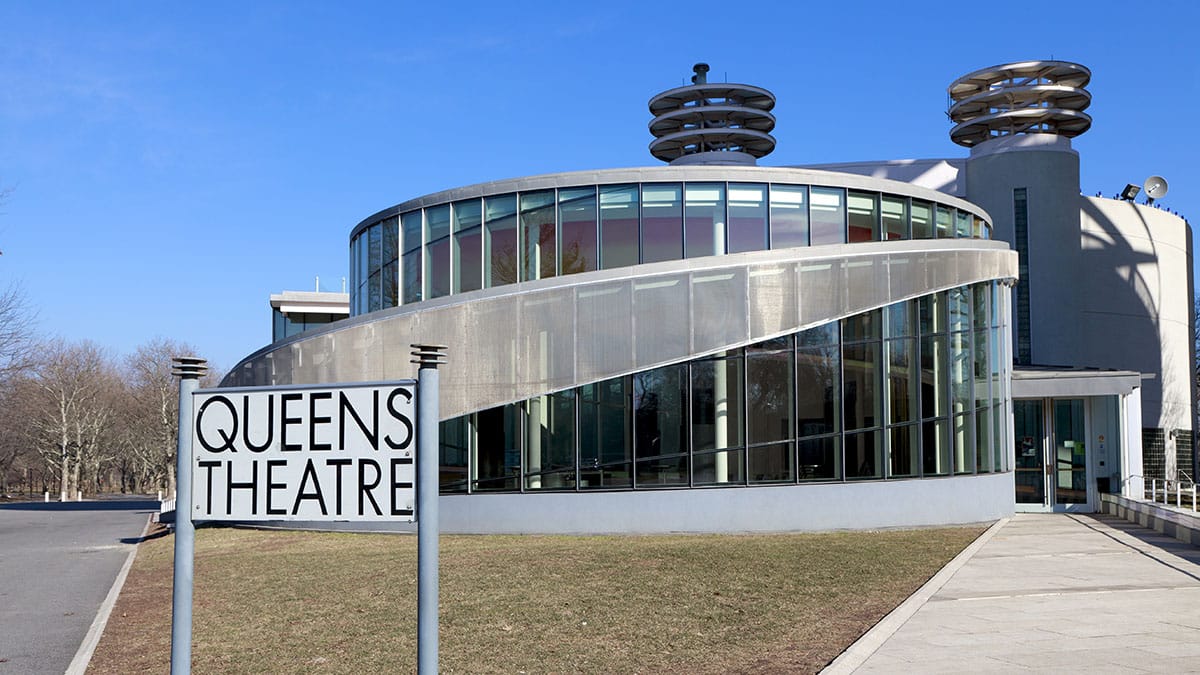
Queens Theatre: Latin and Global Roots Artists
Calpulli Mexican Dance Company: Día de Muertos, Xiomara Laugart and Rumbanza Celebrate Celia Cruz, Eva Ayllón with Daniela Darcourt, Charo…
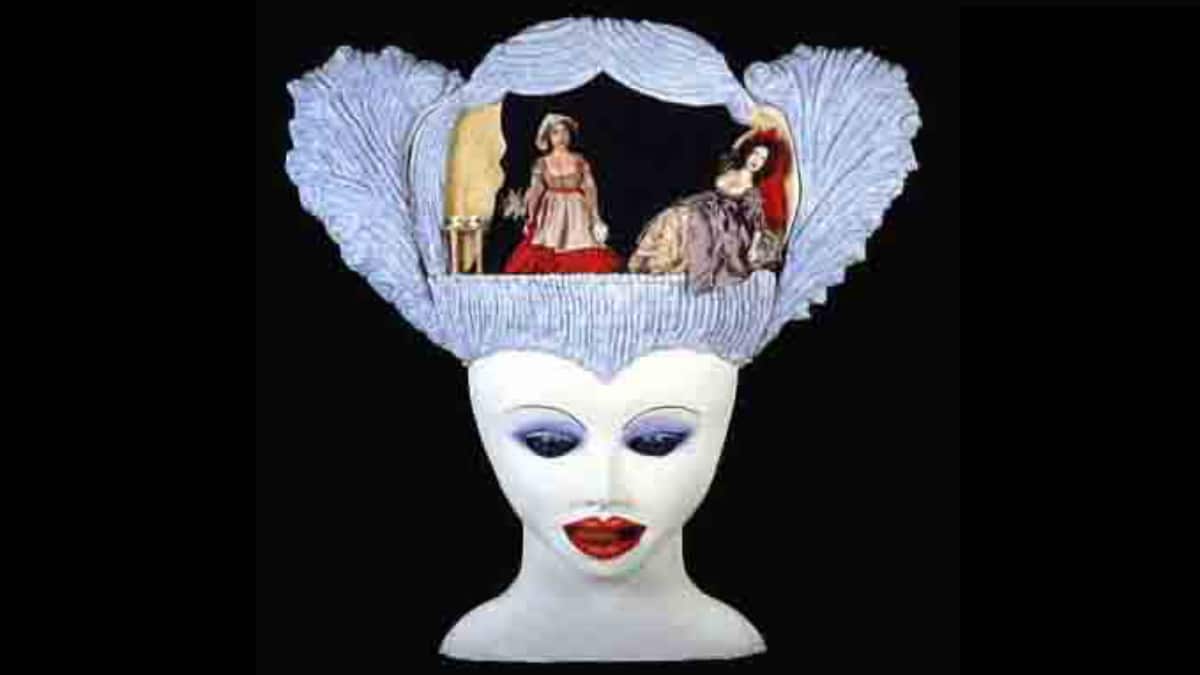
International Puppet Fringe Festival NYC Celebrates Women in Puppetry at The Clemente
Puppet shows, films, exhibitions, and workshops
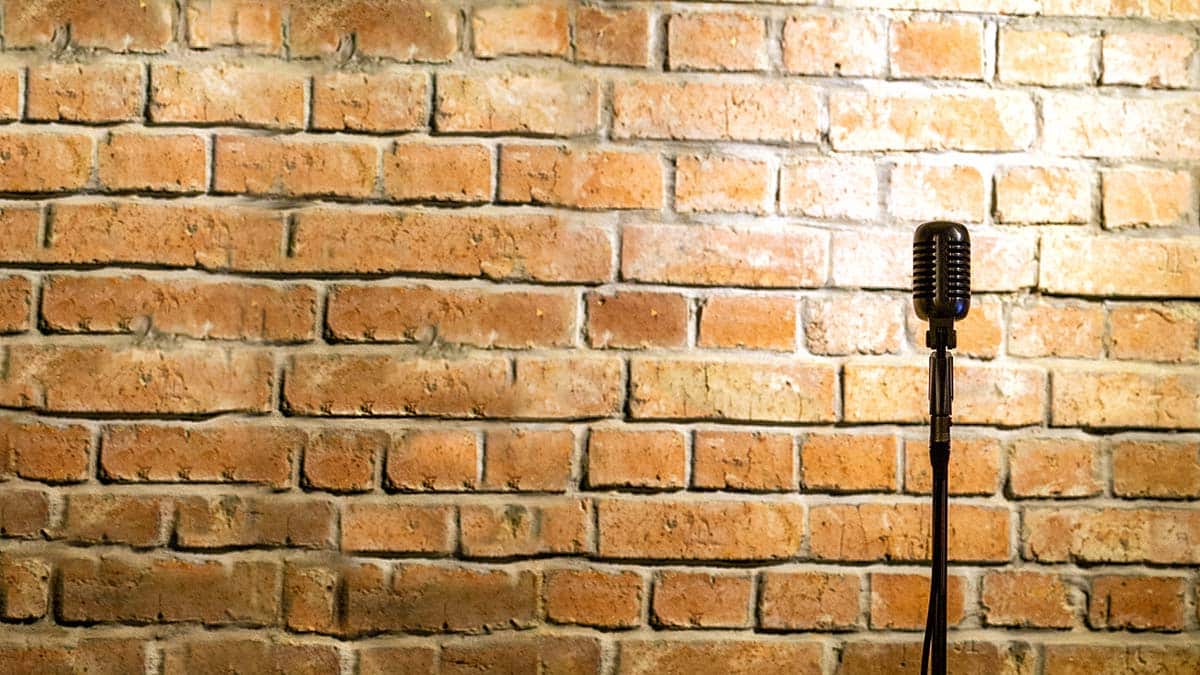
Latin Comedy at Broadway Comedy Club
El Último Chiste: Hombres vs Mujeres, Maratón De Comediantes, Rogelio Ramos, El Último Chiste: Batalla de Comediantes
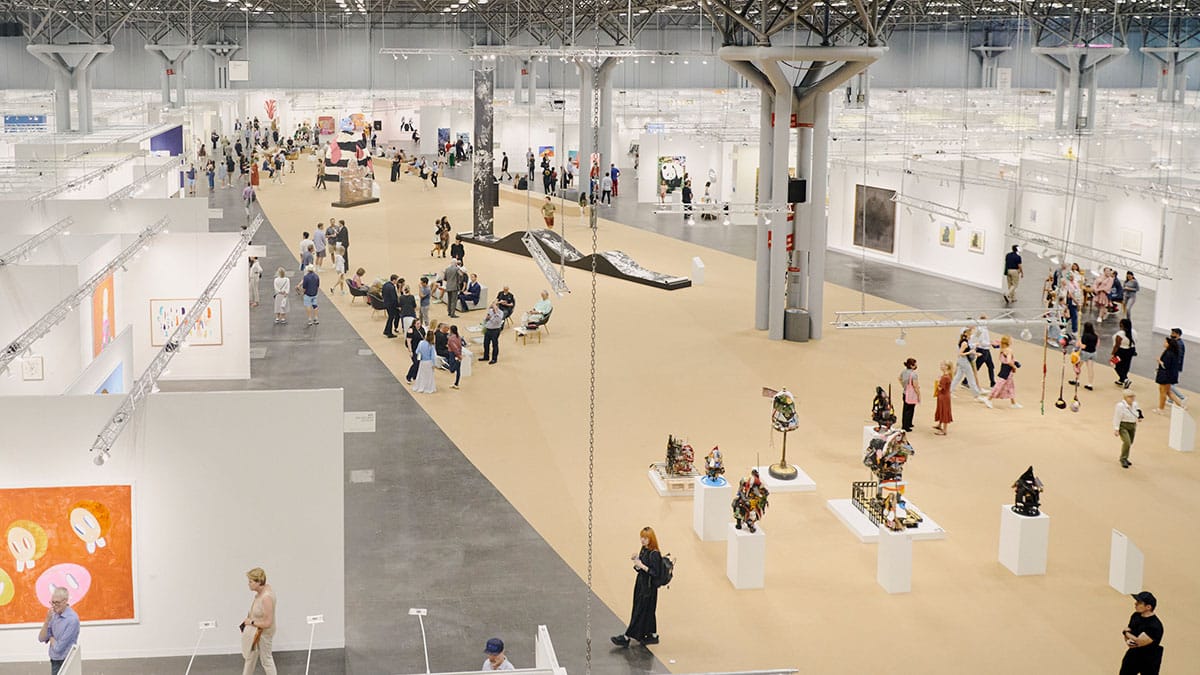
The Armory Show: Latin and Caribbean Art Focus at NYC's Biggest Art Fair
JAVITS CENTER, Hudson Yards, Manhattan

New York Film Festival: Latin and Global Roots Cinema
FILM AT LINCOLN CENTER, Manhattan
BROOKLYN ACADEMY OF MUSIC, Fort Greene, Brooklyn
MUSEUM OF THE MOVING IMAGE, Astoria, Queens
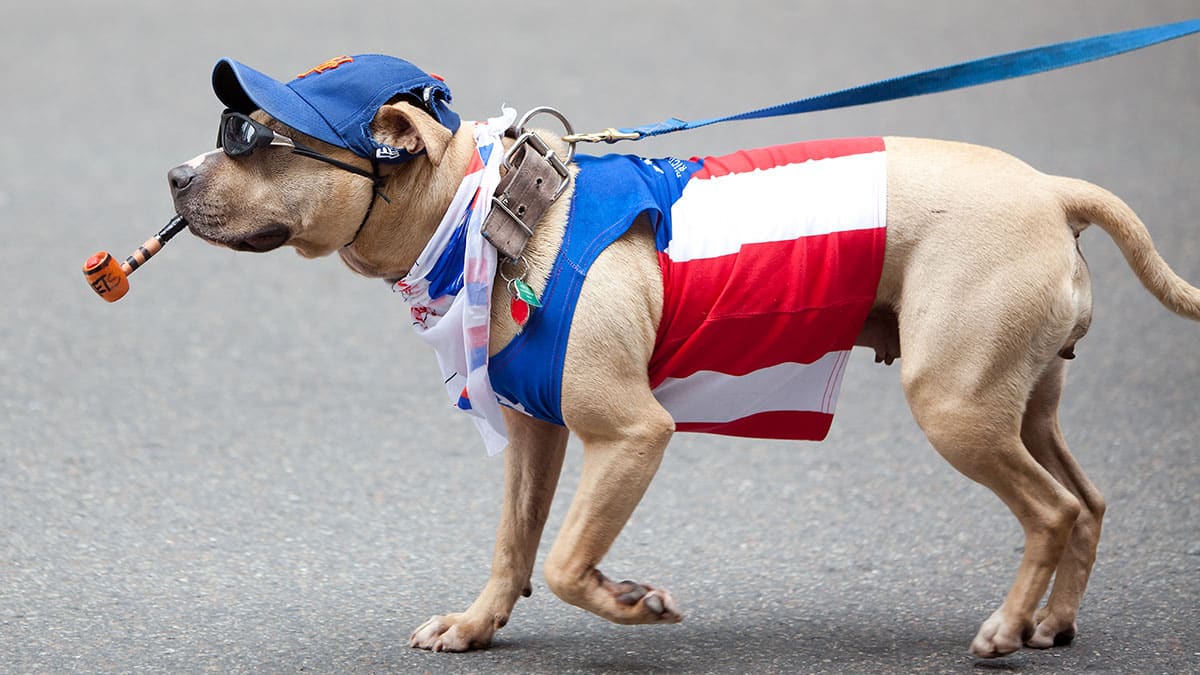
Tompkins Square Halloween Dog Parade Softens Life's Ruff Edges
EAST VILLAGE, Manhattan
Day of the Dead, Día de los Muertos, is a Pan-Latin Family Celebration Whose Mexican Tradition Has Gone Global
Time to remember deceased family members and tend their graves
NYC Restaurant Week Summer 2026: Dates, Prices and How to Book
Prix-fixe lunches and dinners

New York City FC (NYCFC) Latin Highlights 2026 Season
Leagues Cup: Santos Laguna, Cruz Azul, Necaxa;
Black Excellence Night
What is Latin?
“Latin” originally meant Italian. Chilean and Colombian intellectuals in Europe coined the term “Latin American” in 1856. The French actually marketed the false idea of a “Latin race” as justification for trying to conquer Mexico in the 1860s. There is only one human race.
While organizing after World War II, the United Nations institutionalized the term Latin American in 1948. That’s how we became Latin, the English form of “Latino,” meaning “Latin people” in Spanish, Portuguese, and Italian. Latino has entered standard English. Latinx or Latine mean queer, which is cool, but misrepresents and often offends the broader Latino community.
We use Latin because we are more than Hispanic. Our concept of Latin is the sancocho stew of Indigenous, European, African, and Asian cultures in the Americas. Like New York, sancocho has many ingredients, but you can still taste all the individual flavors. Some of the flavors are surprising if you never lived in the Latin world. ¡Ay Bendito!
LATIN HERITAGE
The First Nations of the Americas are Indigenous Peoples who built advanced civilizations including: Mississippian (Cahokia), Ancestral Puebloan (Anasazi), Maya, Aztec, and Inca; or complex societies like the Iroquois and Taíno.
Over 20,000 years of Indigenous heritage in the Americas is the foundation of our concept of Latin. Indigenous people aren’t primitive. They are highly adapted to regional environments, and live in a symbiotic relationship with nature.
Then, to quote Latin jazz and salsa legend Eddie Palmieri (con Dios):
The Spaniard brought the African. The African put everyone to dance. In the States, they took away the drum, and we got the blues.”
The blues is the root of gospel, jazz, and R&B. Those are the roots of country, rock, pop, reggae, soul, Latin soul, funk, salsa, disco, house, rap, and trap; basically the popular music and dances of the US and parts of the Caribbean.
The sum of these traditions influenced the world. Even K-Pop is based on R&B and rap. Many traditions make a round trip and get remixed again.
In fact, much of today’s global youth culture has African Diasporic roots through New York City. Latin culture conquered the world with One Love.
Caribbean
Antiguan and Barbudan, Bahamian, Barbadian, Cuban, Dominican, Garifuna, Grenadian, Haitian, Jamaican, Puerto Rican, Trinidadian, Vincentian
North American
African American, Belizean, Costa Rican, French Canadian, Guatemalan, Honduran, Mexican, Nicaraguan, Panamanian, Salvadoran
South American
GLOBAL ROOTS
European
The horrors of the Colonial Era are over, yet that mess still divides us. On the other hand, European thinkers formed the Enlightenment – from Islamic, Native American, and Chinese ideas. We are all mixed.
West African
Africa is Mother, the mother of all humanity. A lot of Latin culture has African origins, and so does US American culture where the Jazz Age defines us.
Beninese, Bissau-Guinean, Gambian, Ghanian, Guinean, Ivorian, Liberian, Malian, Nigerian, Senegalese, Sierra Leonean, Togolese, Yoruba
Central African
East African
Southern African
Asian
These are some of the surprising Latin flavors. Arab traditions, like the Puerto Rican plena drum, came to the Americas through Africa. After abolition, some Asian communities came as indentured workers. Recent migrations also contributed to regional Latin cultures.
Latin is various blends of all the above, and New York City is our capital. Latin culture brings people together. That’s one of the reasons New York City is the capital of the world. When you are here, you’re a New Yorker. ¡WEPA!
There is no “them.” There is only “us.” And I am, because we are. ¡Aché!
E-le-le, le-le-le… Ay! San Miguel